
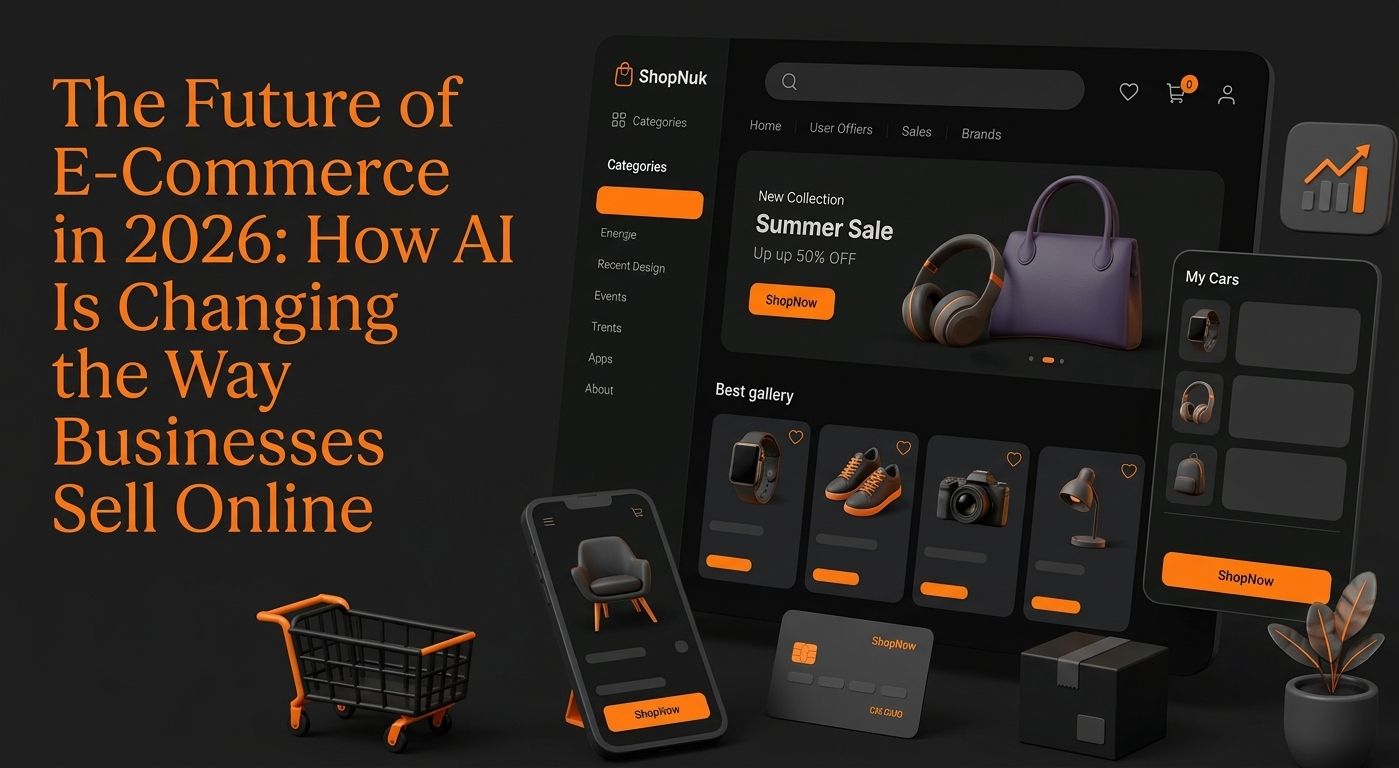
The e-commerce industry is experiencing significant changes in 2026 as artificial intelligence continues to transform how businesses sell products and connect with customers. Online shoppers now expect faster websites, personalized recommendations, secure payments, and convenient shopping experiences. Businesses must adopt modern technology to remain competitive and meet these expectations. Investing in professional web development services can help companies build reliable online stores, improve customer experiences, and prepare their digital businesses for future growth.
How AI Is Transforming the E-Commerce Industry in 2026
Artificial intelligence has become an important part of modern online shopping. It allows businesses to understand customer behavior, automate daily operations, and improve the overall shopping experience.
AI-powered systems can analyze shopping patterns, previous purchases, and customer preferences. Based on this information, online stores can recommend relevant products and create personalized shopping experiences.
For example, when a customer searches for a particular product, an AI-powered platform can suggest similar products, complementary items, or special offers. This makes shopping easier while helping businesses increase customer engagement and sales.
The Growing Importance of E-Commerce Development Services
As online competition increases, businesses need more than a basic online store. They require secure, responsive, and scalable platforms that support their business goals.
Professional e-commerce development services help companies create online shopping platforms with useful features, simple navigation, secure checkout systems, and flexible product management.
Modern e-commerce websites should also provide:
- Mobile-friendly website designs.
- Fast-loading product pages.
- Secure payment gateways.
- Easy shopping cart management.
- Customer account functionality.
- Search engine-friendly structures.
- Integration with inventory and shipping systems.
A well-developed online store creates a positive impression and encourages customers to complete their purchases.
How AI Improves the Online Shopping Experience
Customer experience is one of the most important factors in e-commerce success. AI helps online retailers understand what customers want and provide more relevant shopping options.
Personalized Product Recommendations
AI analyzes customer interests and browsing behavior to recommend products that match individual preferences. This approach helps customers discover relevant items without spending too much time searching.
Personalized recommendations can also introduce customers to products they might not have considered purchasing.
AI-Powered Customer Support
AI chatbots allow online stores to respond to common customer questions at any time. They can provide information about product availability, delivery options, return policies, and order updates.
This reduces the pressure on customer support teams and helps shoppers receive quick answers.
Smarter Search Functionality
Traditional website searches sometimes fail to understand what customers are looking for. AI-powered search systems can recognize user intent and provide more accurate results.
Some advanced systems also support visual searches, allowing customers to upload an image and find similar products.
E-Commerce Website Development and Modern Business Needs
A successful online store needs a strong technical foundation. E-commerce website development involves creating platforms that make it easy for customers to browse products, compare prices, and complete transactions.
Businesses should focus on website speed, security, navigation, and responsive layouts when developing an online shopping platform.
A slow or confusing website can cause customers to leave before completing their purchases. Therefore, developers should focus on creating simple and user-friendly experiences across desktop, tablet, and mobile devices.
Modern websites should also support analytics tools, marketing integrations, inventory management, and flexible payment options.
Why Shopify Development Remains Important
Shopify continues to be a popular option for businesses that want to launch and manage online stores. Its flexible features make it suitable for startups, small businesses, and growing retail brands.
Professional Shopify development can help businesses create customized storefronts, improve shopping functionality, and integrate useful applications.
Custom Shopify Store Design
A professional store design helps businesses communicate their brand identity and build customer trust. Custom layouts, organized product categories, and clear calls to action can make shopping more convenient.
Shopify App Integrations
Businesses can connect their stores with different applications for email marketing, inventory management, shipping, customer support, and payment processing.
These integrations help automate everyday tasks and improve business efficiency.
The Role of Adobe Commerce Development in Large Online Stores
Businesses with complex product catalogs and advanced operational requirements may need a more flexible e-commerce platform.
Adobe Commerce development provides opportunities to create customized shopping experiences, manage large product catalogs, and support complex business operations.
It can also help companies manage multiple storefronts, customer groups, and different pricing structures.
With AI-powered features and third-party integrations, businesses can improve product recommendations, automate certain processes, and deliver more relevant customer experiences.
Website and App Development for Connected Shopping Experiences
Customers increasingly use multiple devices when shopping online. They may discover products through social media, browse a website on their computer, and complete their purchases using a mobile phone.
This makes website and app development an important part of modern e-commerce strategies.
Businesses can connect their websites and mobile applications to provide consistent product information, customer accounts, shopping carts, and order details.
A connected shopping experience makes it easier for customers to interact with a brand across different digital platforms.
Website Maintenance and Upgrades for Better Performance
Launching an online store is only the beginning. Businesses need regular technical support to keep their websites secure, updated, and functional.
Website maintenance and upgrades help prevent technical issues, improve performance, and maintain compatibility with modern browsers and devices.
Regular maintenance may include:
- Updating website software and extensions.
- Fixing technical errors and broken links.
- Improving website loading speed.
- Monitoring website security.
- Updating product information.
- Checking payment and checkout functionality.
Regular upgrades also allow businesses to introduce new features as customer expectations and technology continue to change.
E-Commerce Platform Migration and Business Growth
As businesses expand, their existing e-commerce platforms may no longer support their requirements. They may need better performance, additional functionality, or more flexible management options.
E-commerce platform migration allows businesses to move their online stores to a different platform while improving their technical capabilities.
However, migration requires careful planning. Product information, customer records, order history, website URLs, and SEO settings should be handled properly.
A well-managed migration helps reduce downtime and protects important website data. Businesses should also test their new platform before making it available to customers.
The Future of AI in Online Retail
Artificial intelligence is expected to become even more integrated into online retail operations. Businesses are exploring new ways to use automation, predictive analytics, and intelligent shopping tools.
Some important developments include:
AI Shopping Assistants: Virtual shopping assistants can help customers compare products, understand features, and find suitable options.
Predictive Inventory Management: AI can analyze sales trends and customer demand to help businesses plan inventory more effectively.
Automated Marketing: Intelligent systems can help businesses create targeted campaigns based on customer interests and shopping behavior.
Fraud Detection: AI-powered security systems can identify unusual transaction patterns and help reduce potential payment fraud.
These technologies can help businesses save time, improve operational efficiency, and create better shopping experiences.
Challenges Businesses Should Consider When Adopting AI
Although AI offers many advantages, businesses should consider certain challenges before implementing new technologies.
Data privacy is one of the most important concerns. Online stores collect customer information, so they must follow applicable privacy regulations and use appropriate security measures.
Another challenge is integration. Businesses need to ensure that AI tools work properly with their existing websites, payment systems, and inventory platforms.
Companies should also remember that technology cannot completely replace human understanding. Customer support, business strategy, and decision-making still require human involvement.
A balanced approach that combines AI automation with human expertise can produce better long-term results.
Conclusion: Building a Smarter E-Commerce Business in 2026
The future of online retail depends on innovation, customer experience, and reliable technology. AI is changing how businesses understand shoppers, manage products, provide customer support, and increase sales. Companies that invest in modern platforms and continuously improve their digital operations will be better prepared for changing market demands.
Whether a business needs a new online store, platform migration, custom integrations, or ongoing technical support, choosing the right development partner is important. Professional e-commerce development services can help businesses build scalable platforms, adopt modern technologies, and create better online shopping experiences in 2026 and beyond.